What Happens When Money Secrets and Marriage Collide?

The Beatles may have told people all stock-footage-young-woman-gesturing-for-quiet-or-shushingthey need is love, but many couples who have experienced monetary conflicts in their marriage would disagree.

Surveys over the past decade consistently point to financial arguments as a leading cause of divorce. However, money habits lying beneath the surface of a relationship can create as much—if not more—financial friction.

According to a recent poll by CreditCards.com, the majority of women would terminate a relationship if they discovered their significant other was keeping secrets about their money habits—especially if those secrets had negative consequences for the family’s finances. In fact, the study found women see a partner’s inability to pay routine bills as off-putting as discovering they have a criminal record.

Click here to read why couples don’t always talk truthfully about their finances, and click here to watch a Google Hangout discussing the story.

Identity Theft: Why Your Child May Be in Danger

Your child’s full name and date of birth social-security-number-school-children-1024x680are all someone needs to steal their identity. To shed light on this form of identity theft, law enforcement professional and former fraud supervisor Robert Chappell, Jr., explores the crime in his new book, Child Identity Theft: What Every Parent Needs to Know. Although more than 500,000 children become victims of identity theft each year—half of them under age 6—Chappell says the threat is one that parents must educate themselves about so they can teach their children how to protect their identity.

I spoke with Chappell about how to detect if a child’s identity has been compromised, creative ways identity thieves steal a child’s personal information, and why children are often a better target than adults. Read the Q&A and watch a Google Hangout with Chappell.

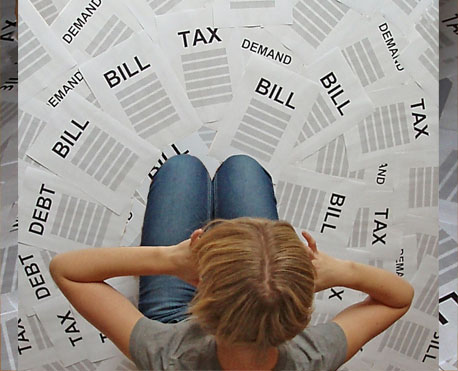
Surviving the Emotional Toll of Bankruptcy

Maybe money can’t provide happiness,Going Bankrupt1 but it can certainly inspire negative emotions, including sadness, grief, and shame. Those are just a few feelings people may experience when they claim bankruptcy.

While the financial consequences of bankruptcy are disconcerting, the mental burden can be overwhelming, with wide-reaching effects. “It’s important to acknowledge the act of filing bankruptcy can be psychologically difficult, cause stress on relationships, and even be traumatic for a family,” says Joseph Goetz, president of the Financial Therapy Association.

The focus is often on the financial steps—compiling a comprehensive list of debts, hiring an attorney, seeing the case through—but neglecting the emotional aspect can have long-term consequences. Many people who turn to bankruptcy have juggled their debt for so long that they’re emotionally exhausted by the time they’re ready to file. Click here to learn how bankruptcy filers can set themselves on the path toward emotional recovery.

Boomerang Kids vs. Parents: How to Minimize Conflict

Joe Liebeskind interned with the Young-Adult-Leaving-Home560x350New Jersey Nets (now called the Brooklyn Nets) in the summer of his junior year of college. At the end of the internship, his coordinator said a job would be waiting for him once he finished school. But the diploma he received in December 2008 wasn’t the golden ticket he thought it would be—bad timing meant the team couldn’t hire him.

After graduating from Pennsylvania State University, Joe moved back in with his parents in Hillsdale, N.J., for three-and-a-half years. However, his decision to live at home wasn’t a result of not landing a job with the basketball team. “I was always planning to move home for at least a year to try and [save] some money, as to not be living paycheck to paycheck with the cost of rent,” he says.

Many of today’s college graduates follow Joe’s path. An estimated 3 in 10 young adults have moved back in with their parents in recent years, according to a Pew Research Center survey released in March. Saving money is their chief concern, as nearly 80 percent of those currently living at home say they don’t have enough money put away to lead the kind of independent life they want.

Many of today’s graduates—known as “boomerang kids”—are turning to their parents for monetary support. They’ve returned to their childhood homes, hoping that living under their parents’ roof will enable them to find a job and save enough money to move out.However, moving back home can lead to arguments between kids and their parents and can potentially damage their relationship in the long term. Parents who prepare for these challenges before greeting their kids at the front door have a better chance of avoiding these hardships. Click here to read the article.

How to Convince a Prospective Employer to Overlook Poor Credit

Job seekers have plenty to worry628x471 about these days. Stiff competition and fewer available jobs are holding many Americans back from joining the labor force. Unfortunately, job seekers with poor credit have yet another thing working against them.

Nearly half of U.S. employers conduct credit background checks on job candidates, according to a 2012 survey by the Society for Human Resource Management. Red flags differ among employers but could include late payments, maxed credit cards, or other financial black marks that indicate a lack of responsibility in a hiring manager’s eyes.

The good news: Even if job seekers have a lousy credit history, they can still make a strong case for why an employer should hire them. In fact, among organizations that perform credit history checks, 80 percent say they have hired someone despite a poor credit report, according the SHRM survey.

A key factor is how well the applicants present themselves. Click here for tips on how to play up one’s strengths and use a poor track record with credit to their advantage.

Is Your Teenager Ready for a Credit Card?

Teaching teenagers how to save and Teen-with-Credit-Card1spend responsibly is one thing. But teaching them how to use a credit card? That presents a host of new challenges, with the potential for slipups that could have damaging long-term effects.

To apply for a credit card, anyone younger than 21 must either have a cosigner or verifiable income that proves they have the means to repay the credit.With stricter requirements in place today for, teenagers interested in using credit must rely on their parents. Before handing them a credit card, though, parents can gauge their child’s financial responsibility by seeing how well they manage a checking account.

Many banks offer checking accounts for applicants as young as 13, and they come with monitoring tools for parents. If the checking account is used responsibly, parents can start discussions with their teenager about credit cards.

Read this article to learn more about how parents can measure their child’s responsibility before handing them a credit card.

The Benefits—and Dangers—of Serial Refinancing

Millions of Americans have taken Refinancing-home-mortgages-rebounded-higheradvantage of today’s record-low interest rates on home mortgages. With rates consistently dropping over the last four years, the housing market has spawned a new group of consumers: the serial refinancers.

But the heyday may not last much longer. The Mortgage Bankers Association projects rates will drift up in 2013, with the 30-year rate on a fixed mortgage rising above 4 percent by the middle of next year, which will curtail retail volume.

However, with interest rates currently hovering around 3.5 percent, now is an opportune time for many to refinance—so long as they land their best offer. Click here to read the article.

How to Find the Right Contractor for the Job

Thinking about updating your Construction Workers Looking at Roofcontemporary kitchen to something more modern? Or maybe you want to give the master bathroom that Jacuzzi tub and steam shower you’ve been dreaming of? Whatever the home renovation, you’ll want to find the right contractor—someone you can trust to do a great job for a fair price.

More Americans are staying in their homes due to the sluggish housing market, and many are choosing to remodel. Last year, the National Association of Home Builders’ Remodeling Market Index (RMI), a good benchmark for judging the pulse of the remodeling industry, reached a five-year high and has stayed strong this year.

Click here to read the article. You can also listen to me discuss the tips with Michael Finney, the host of KGO 810 San Francisco’s Consumer Talk show (the interview starts at 13:00).

Laid Off? Here’s How to Get Your Finances in Order

A layoff can leave you frustrated, 46527388-laidoff-manconfused, distraught. You might panic at the thought of having to find a new job in this tough market. But a job loss doesn’t have to mean your expenses spiral out of control—so long as you take the right steps to reposition your finances.

If you’ve recently been let go, you’re not alone. Although the unemployment rate dropped below 8 percent in September, major layoffs have taken place this year, including 8,700 employees from Pepsi, 9,000 from IBM, and 14,200 from American Airlines. In the month of September alone, U.S.-based employers announced plans to cut 33,816 jobs, according to outplacement consulting firm Challenger, Gray, and Christmas.

For an article for U.S. News & World Report, I examined what steps the recently unemployed should take so that they don’t jeopardize their financial stability.

Why Most High Schoolers Don’t Know How to Manage Their Money

High school students are studying up 5474825330_4470fa5928_zon calculus, advanced chemistry, and world history, but most aren’t learning fundamental money lessons to help them financially navigate the real world.

Such is the case with Jessica Pollack’s son Adam, an 18-year-old who graduated in May from Los Alamitos High School in Orange County, California. Much to Jessica’s chagrin, the school doesn’t require its students to take a personal-finance class to graduate. “It’s a top-rated school, but there is no personal-finance requirement, which is just astonishing to me,” Jessica says. “There’s a technology requirement that’s statewide. As a technology teacher, I appreciate that, but these kids are exposed to computers and technology all the time. Yet when it comes to buying the computer and financing it, they’re clueless.”

Like Jessica’s son, the majority of children will graduate from high school without being taught basic money lessons, including how to create a budget or write a check. For an article for U.S. News & World Report, I explored why only 13 states require high school students to take a personal-finance class to graduate.