A Sound Proposition

Six years of working at a nonprofit 150609_pac_john-bialkoffering rental housing to low-income families taught John Bialk just how precious quiet can be. He frequently fielded noise complaints from tenants—from late-night parties to loud TVs. And these issues often led to nasty feuds between neighbors. “I’d see cars keyed, tires flattened, physical threats,” says the Neshkoro, Wis., resident. “As a property manager, you sit at your desk waiting for bad things to happen.” In the meantime, he came up with a solution: a noise-monitoring system that works on a wireless network to alert landlords to problems.

Click here to read the full story.

How to Unplug From Work

Bet you can’t remember the last time Screen Shot 2015-09-09 at 3.14.49 PMyou worked a 35-hour week. Thanks to technology, “employees feel the need to do more, work harder, and put in longer hours to stay competitive,” says Texas A&M management professor Wendy Boswell, who studies work/life balance. Smartphone users spend five hours on work email each weekend, reports the Center for Creative Leadership. A poll by the employment website Glassdoor found that 61% of people have worked during a vacation.

Productivity falls sharply after a 50-hour workweek, found Stanford economics professor John Pencavel. So connecting less is good for you and your company—though your boss may need convincing.

Click here to read the full story.

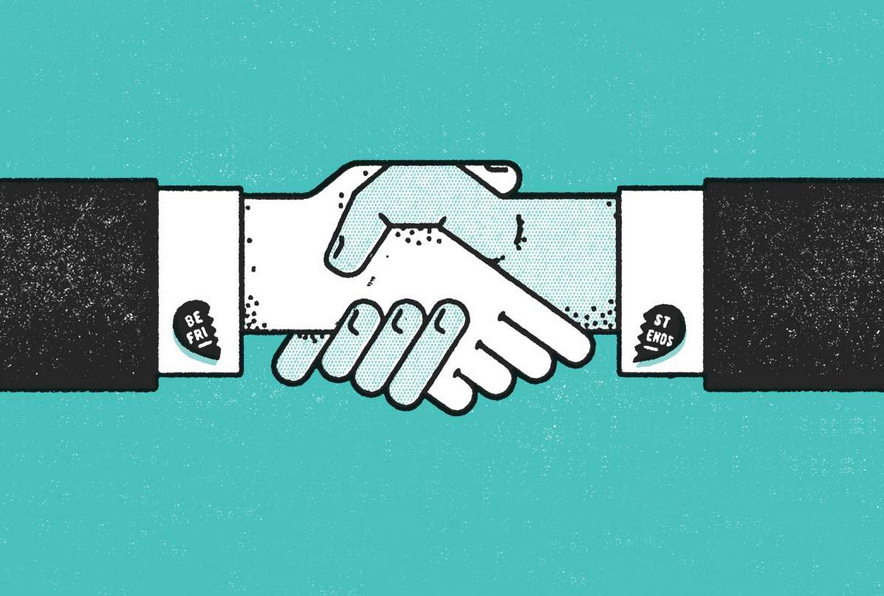
Make Your Boss Your BFF

Buddying up with the boss can pay off, literally. Screen Shot 2015-06-01 at 5.04.54 PM
In a study of executives done at Georgetown University, nine in 10 acknowledged that favoritism occurs in larger organizations, and 23% of them said they had personally practiced favoritism in making promotion decisions. Read: Getting more familiar with the person who signs off on your raises can help you make sure they’re bigger. Follow these tips to cozy up without crossing the line.

Click here to read the full story.

How to Take Advantage of Your Boss’s Biggest Fear

Star performers, rejoice. This is your aaeaaqaaaaaaaamjaaaajgjjote5owyxlwvlndatnda2ns04zmriltu0n2q3njqwytawzqyear. More than three-quarters of human resources executives polled recently by Challenger Gray & Christmas report that they are struggling to fill open positions—and 91% say that if the economy keeps expanding at its current rate, the war for talent will worsen. Unemployment is in fact expected to continue its slow creep downward in 2015, to 5.7% from 5.9% this September, according to the Philadelphia Federal Reserve’s most recent forecast.

That means bad news ahead for employers but good news for top producers, who will have real leverage in the coming year. Turnover costs are especially high for positions that are significant contributors to revenue—sometimes 200% of a worker’s salary. So it’s no wonder that 57% of the 4,700 companies surveyed in PayScale.com’s recent “Compensation Best Practices Report” cited keeping high-performing workers as a top business concern, up from 20% in 2010. “Just about every HR department should be discussing talent retention,” says David Card, director at the Center for Labor Economics at the University of California at Berkeley.

You can turn your boss’s anxiety to your advantage. Click here to read the full story.

How to Compete for an Out-of-Town Job

Three out of four hiring managers recently 141121_PCR_BetterthanLocalsurveyed by Challenger Gray & Christmas reported a shortage of local talent. So theo­ret­ically you could have better luck finding the job of your dreams if you’re willing and able to move.

Problem is, many companies are hesitant to hire out-of-towners because of concerns over relocation, money, and local knowledge. But you can put hiring managers at ease by preemptively addressing three key issues in your application.

Click here to read the full story.

How to Ace the New Job Interview

Planning your next big career move? 141001_FT_JobInterviewGet ­

going. Job openings climbed to 4.7 million in June, the highest level since 2001, reports the Bureau of Labor Statistics. And in a recent survey by Challenger Gray ­& Christmas, 77% of hiring managers reported trouble filling slots because of a talent shortage.

To succeed in this sunnier market, though, you need a firm grasp on today’s hiring process, one that may be far different from what you faced the last time you hit the circuit. For starters, businesses are going slow, spending an average of 23 days to fill a slot in 2013, vs. 12 days in 2010, according to employer review website Glassdoor. And many are replacing antiquated hiring methods with more offbeat ways to vet job seekers.

“Companies are finding traditional job interviews aren’t identifying the high-quality candidates they need,” says Parker McKenna of the Society for Human Resource Management. Numerous academic studies have unearthed flaws in the process. A 2013 one co-written by psychologist Jason Dana at the Yale School of Management found that many hiring managers are mistakenly overconfident in their ability to assess how well a candidate will perform through a one-on-one interview. To get an edge on your competition, you should prepare for four types of tests.

Click here to read the full story.

4 Ways to Find an Unlisted Job

Your next job probably won’t be advertised. 140610_FF_UnpubJobs_1When it comes to filling positions at the director level and up, hiring managers prefer to target their ideal candidates rather than sift through applicant résumés. But don’t just count on a call from a recruiter to pluck you from the ranks. “The job seeker who waits to be tapped on the shoulder might be waiting awhile,” says Tonushree Mondal of HR consulting firm Mercer.

Click here to read the full story.

Make your desk impress

Appearance matters — and in the corporate his-productive-work-deskworld, that applies to your desktop as much as your dress attire.

“Your space speaks to your work mentality, creativity, and organizational skills,” says Sam Gosling, a psychology professor at the University of Texas at Austin and the author of Snoop: What Your Stuff Says About You.

And with 70% of American employees now working in open-plan offices, as the International Facility Management Association reports, desktops are more in the public eye than ever. Ensure that yours sends the right message.

Click here to read the full story.

Tweet yourself to a new job

If you want to shine in a competitive twitter_jobs1workforce, take to Twitter. Nearly 95% of recruiters surveyed by software firm Jobvite used or planned to use social media to find and vet candidates last year.

“But you need a strong social media presence even if you aren’t job seeking,” says Rochester, N.Y., job coach Hannah Morgan, co-author of Social Networking for Business Success.

You can use Twitter to improve your visibility inside and outside your company, and connect yourself with influencers and hiring managers along the way. Whether you’re new to the platform or have tweets under your belt, there are steps to sharpen your networking skills.

Click here for more on the power of Twitter in your career.

6 Character Traits that Can Nail a Promotion

Gunning for a raise or promotion? Better start happy-coworkersmaking nice with your coworkers.

People who initiate friendships at work, offer their colleagues help and engage with office mates at social events are 40 percent more likely to get a promotion, according to a 2011 study by Shawn Achor, a lecturer on psychology at Harvard University and author of The Happiness Advantage: The Seven Principles of Positive Psychology That Fuel Success and Performance at Work.

While skills, experience and results delivered are obviously factors in career advancement, one’s likeability is also a key component of workplace success. If you’re too competitive (or too much of a brown-noser), you can alienate the very coworkers who could be crucial to your success. After all, bosses don’t want to promote people who are disliked around the office. Even if you’re not hanging out during non-office hours, you’re probably spending more time with your colleagues than with your non-work pals. So building relationships may be one reason that 30 percent of those polled by Monster said that friendships make work a lot more pleasant.

Click here to see what steps to take to win over your boss and your colleagues.